Introduction
A beautiful garden rarely happens by accident. Many beginners jump straight into planting without a clear plan, only to face issues like poor growth, overcrowding, or plants that don’t survive. It’s frustrating to spend time and effort and still not see results.
If you’ve ever planted seeds with excitement and ended up with uneven growth or empty pots, you’re not alone. Good gardening starts long before the first seed goes into the soil—it begins with planning.
The good news is that garden planning doesn’t have to be complicated. With a few essential tools and simple strategies, you can create a setup that supports healthy plant growth and saves you time in the long run.
Step-by-Step Guide to Garden Planning
1. Understand Your Space
Before buying tools or plants, take a close look at your available space.
What to do:
- Measure the area (balcony, backyard, or terrace)
- Observe sunlight patterns throughout the day
- Check wind exposure and water access
Why this works:
Knowing your space helps you choose the right plants and layout. Plants placed in the wrong conditions often struggle to grow.
Common mistake:
Ignoring sunlight direction and placing all plants in one area.
2. Decide What You Want to Grow
Your garden should match your needs and lifestyle.
What to do:
- Choose between vegetables, herbs, or decorative plants
- Start with easy-growing options
- Think about how often you’ll use or maintain them
Why this works:
Growing plants you actually need or enjoy keeps you motivated and consistent.
Common mistake:
Planting random varieties without understanding their care requirements.
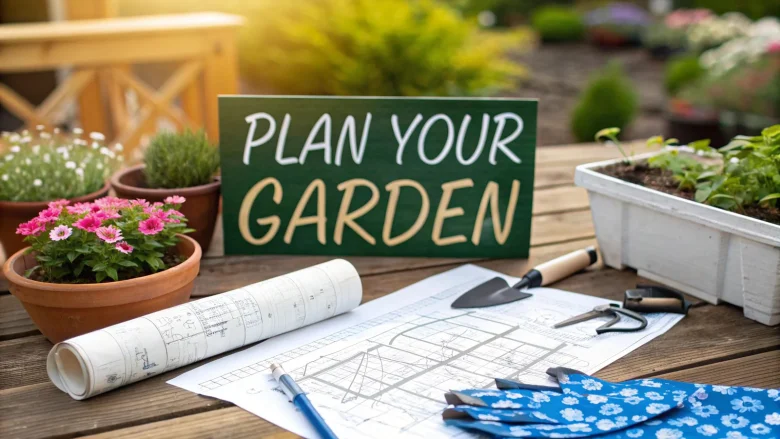
3. Plan Your Garden Layout
A simple layout can prevent many future problems.
What to do:
- Group plants based on sunlight and water needs
- Leave space between plants
- Use containers, raised beds, or ground planting
Why this works:
Organized layouts improve airflow, reduce disease risk, and make maintenance easier.
Common mistake:
Overcrowding plants, which leads to weak growth.
Essential Gardening Tools for Beginners
1. Hand Trowel
A small tool used for digging, planting, and transferring soil.
Why it’s important:
It allows precise planting, especially in pots and small spaces.
2. Watering Can or Hose
Used for controlled watering of plants.
Why it’s important:
Helps prevent overwatering and ensures even distribution.
3. Pruning Scissors
Used to trim dead leaves and shape plants.
Why it’s important:
Encourages healthy growth and prevents disease spread.
4. Gardening Gloves
Protect your hands from dirt, insects, and sharp objects.
Why it’s important:
Makes gardening safer and more comfortable.
5. Garden Fork or Rake
Useful for loosening soil and removing debris.
Why it’s important:
Improves soil structure and root growth.
Practical Tips for a Perfect Garden Setup
Start with Healthy Soil
Soil quality directly affects plant growth. Add compost or organic matter to improve fertility.
Use Proper Containers
If you’re gardening in small spaces, choose pots with drainage holes to avoid water buildup.
Follow a Watering Routine
Check soil moisture instead of watering blindly. Each plant has different needs.
Label Your Plants
This helps you remember what you planted and how to care for each type.
Keep It Simple
Avoid adding too many features at once. Build your garden step by step.
Common Garden Planning Mistakes to Avoid
- Skipping the planning stage
- Using poor-quality soil
- Overcrowding plants
- Ignoring seasonal planting
- Buying tools you don’t actually need
Avoiding these mistakes saves time and prevents unnecessary frustration.
Expertise & Trust Section: Best Practices for Long-Term Success
1. Focus on Sustainability
Use natural compost and reuse materials when possible. This improves soil health and reduces waste.
2. Observe Your Plants Regularly
Early signs of problems—like yellow leaves or slow growth—can be fixed if noticed quickly.
3. Avoid Overcomplicating Your Setup
A simple, well-managed garden performs better than a complex, neglected one.
4. Maintain Clean Tools
Clean tools reduce the risk of spreading plant diseases.
Why this matters:
These practices ensure your garden remains healthy, productive, and easy to manage over time.
FAQs
1. What is the best time to plan a garden?
The best time is before the planting season begins. This gives you enough time to prepare soil and tools.
2. Do I need expensive tools to start gardening?
No, basic tools like a trowel, watering can, and scissors are enough for beginners.
3. How do I choose the right plants?
Pick plants that match your climate, available sunlight, and maintenance level.
4. Can I plan a garden in a small space?
Yes, container gardening is perfect for balconies, rooftops, and small areas.
5. How do I improve poor soil?
Add compost, organic matter, and ensure proper drainage for better results.
Conclusion
Garden planning is the foundation of a successful and enjoyable gardening experience. By understanding your space, choosing the right plants, and using essential tools, you can avoid common beginner mistakes and create a thriving garden.
Remember, you don’t need a large area or expensive equipment to get started. A simple, well-planned setup often produces the best results.
Take your time, start small, and focus on learning as you grow. With patience and consistency, your garden will not only look beautiful but also become a rewarding part of your daily life.